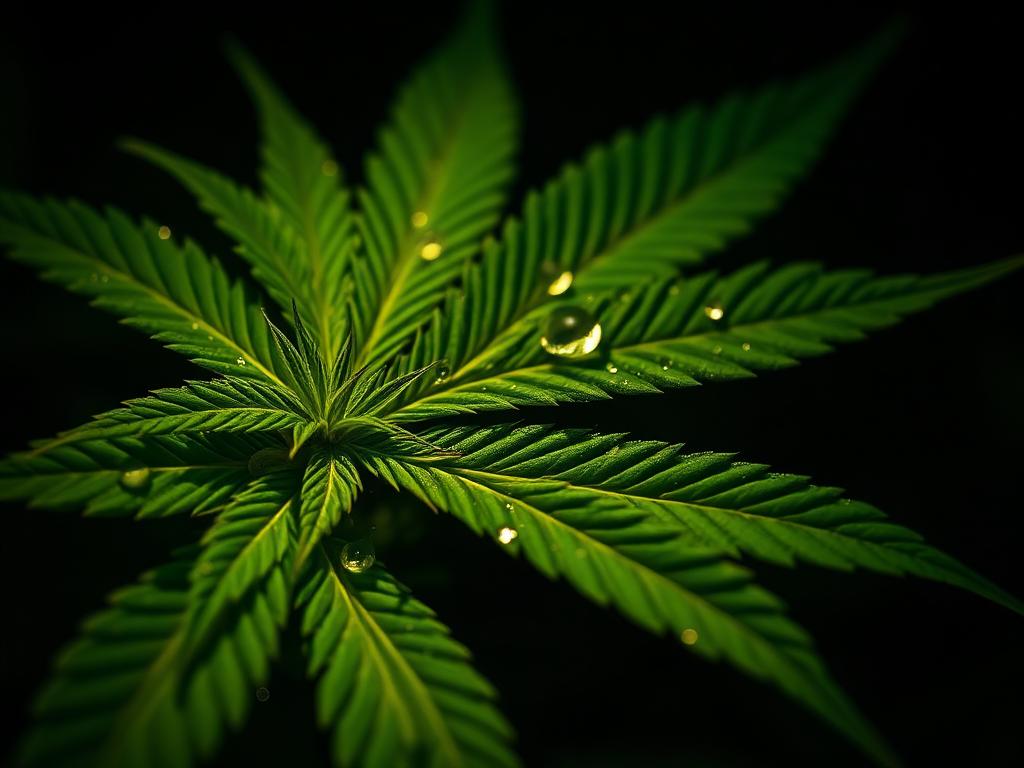
How CB1 and CB2 receptors modulate mood, memory, appetite and pain across every mammalian body.
The endocannabinoid system is not, despite its name, a system built around cannabis. It is a signaling network we have always had — a lipid-based messenger circuit woven through the nervous system, immune system and gut. Cannabis was simply the plant that helped us find it.
Two receptors do most of the work. CB1 is dense in the brain, particularly in regions that shape mood, memory, appetite and pain. CB2 clusters in the periphery, especially on immune cells. Together they act less like on/off switches than like dimmer dials, quietly modulating the intensity of other signals rather than initiating them.
The body makes its own ligands for these receptors: anandamide, named after the Sanskrit ānanda (bliss), and 2-arachidonoylglycerol, a mouthful usually shortened to 2-AG. Both are synthesized on demand, act locally and are broken down within seconds. This is a system built for delicate, moment-to-moment adjustment.
Its central trick is called retrograde signaling. When a downstream neuron fires too enthusiastically, it manufactures endocannabinoids that drift backwards across the synapse and quiet the upstream cell. In other words, the endocannabinoid system is one of the ways the brain tells itself to calm down.
This helps explain why cannabinoids touch so many domains at once. Anxiety, appetite, pain perception, sleep, motor control, thermoregulation, immune activity, memory consolidation — anything the nervous system has to fine-tune, the endocannabinoid system is somewhere in the loop.
THC binds CB1 directly and strongly; that is why it produces the marked psychoactive shift we associate with cannabis. CBD works differently. It has weak direct affinity for either receptor but modulates their behavior indirectly, and touches other targets — TRPV1, 5-HT1A, GPR55 — that are only beginning to be mapped.
The clinical picture that has emerged over two decades is neither the panacea claimed by advocates nor the empty story dismissed by skeptics. There is strong evidence for cannabinoids in specific epilepsies, in chemotherapy-induced nausea, and in some kinds of chronic pain. There is weaker, promising evidence in anxiety, PTSD and sleep. And there is, in many other conditions, simply not enough good data yet.
What is beyond dispute is the biology. Every mammal we have looked at carries this system. It is ancient. It has been quietly maintaining balance in vertebrate bodies for at least five hundred million years, and it will keep doing so whether or not any cannabis plant is nearby.
The plant, in that sense, is a lucky key. The lock was already in the door.
Terpenes and the Entourage Effect
Why the whole plant may act differently than isolated cannabinoids — and where the evidence really stands.
CBD in Treatment-Resistant Epilepsy
A decade of trials that turned an outsider molecule into approved medicine.
Cannabis in Traditional Ayurveda
Vijaya as ally and adversary — a text-based reading across two millennia.
Sign in to join the conversation. Guests can read every reply.
Loading conversation…