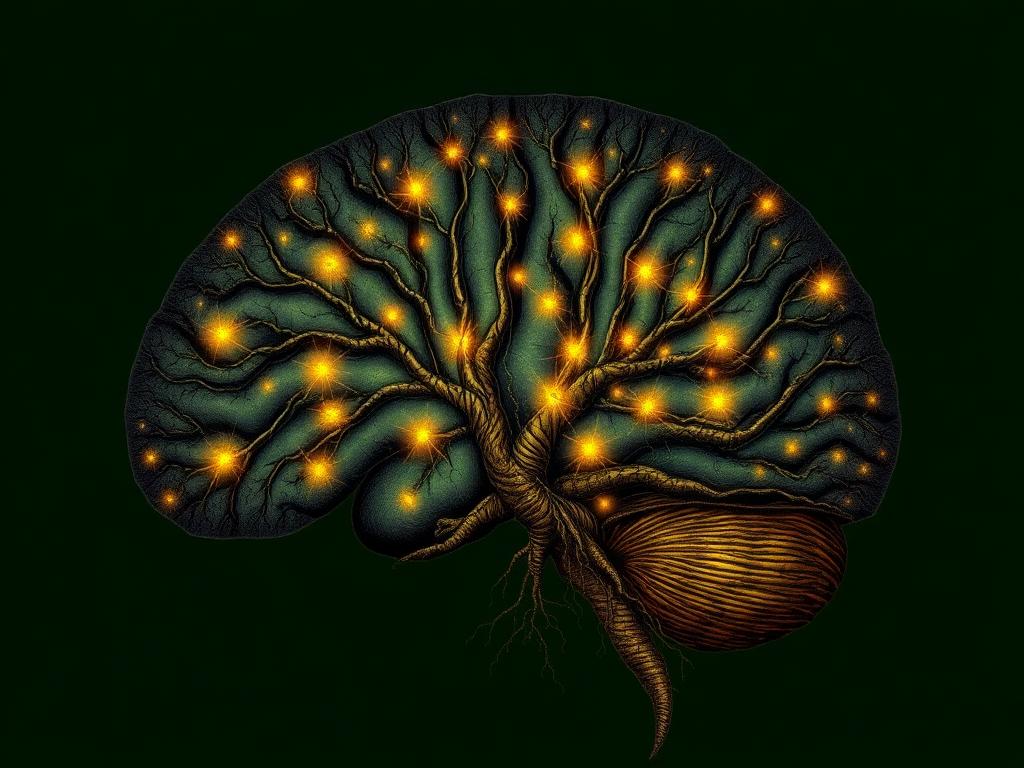
A twentieth-century idea meeting a networked world.
Pierre Teilhard de Chardin — Jesuit priest, paleontologist, embattled mid-twentieth-century thinker — proposed that just as the biosphere is the layer of the planet occupied by life, there exists an emerging layer of shared thought: the noosphere. Human minds, connected through language, culture and (in his prescient later writing) technology, would together constitute a new kind of planetary phenomenon.
Teilhard's own framework was theological. The noosphere was, for him, part of a cosmic evolutionary trajectory tending toward what he called the Omega Point — a state of maximum complexity and consciousness identified, in his Christian framing, with the fullness of Christ. This theology got him in career-long trouble with both his Church and the scientific establishment.
Setting the theology aside, the underlying observation has aged unexpectedly well. Human beings do, demonstrably, live inside a shared symbolic environment. Language is not merely a set of individual tools; it is a distributed infrastructure that changes what thought is possible. Culture, in this sense, is a genuine environment, and one that has changed the trajectory of the biosphere as decisively as the emergence of oxygen once did.
The internet has made Teilhard's basic image nearly literal. Billions of humans, continuously exchanging symbolic content across a planetary network, produce something that at least resembles a global cognitive substrate. Whether it constitutes a mind, or merely a mind-shaped infrastructure, is not obvious.
The skeptical reading is that the noosphere metaphor overreaches. Networks are not minds. Distributed activity that looks integrated on satellite imagery may be, at ground level, largely fragmented, contradictory and often hostile to itself. To call this collective activity 'consciousness' is, on this reading, to blur categories in a way that produces more confusion than insight.
The more sympathetic reading takes seriously that the internet has actually done something to human cognition, at scale, that no previous technology has done. Thought is now conducted, for many people much of the time, in near-real-time exchange with a distributed elsewhere. What that does to individual minds, and what emerges collectively from the exchange, is not fully understood.
The pathologies are visible. Algorithmic amplification of outrage, coordinated disinformation, the erosion of shared epistemic ground — none of these look like the Omega Point Teilhard was aiming at.
The affordances are also visible. Cross-cultural exchange at unprecedented scale, rapid coordination on shared problems, the pooling of scientific work across previously isolated communities. Both are real. The noosphere, if that is what to call it, is neither utopia nor dystopia. It is the specific and rapidly evolving thing it is.
What Teilhard offered was not a prediction but a way of noticing. Something is happening at the level of the whole species that is not reducible to the individual minds involved. Whether we call it noosphere, collective consciousness, or something more modest, it is worth attending to on its own terms rather than pretending it is merely the sum of its parts.
The Global Consciousness Project
Twenty-plus years of RNG data — what to make of it.
Crowds, Rituals and Shared Emotion
Synchronized breathing, heart rate and collective effervescence.
Egregores: A Careful Working Definition
Group-minds as functional (if slippery) objects.
Sign in to join the conversation. Guests can read every reply.
Loading conversation…