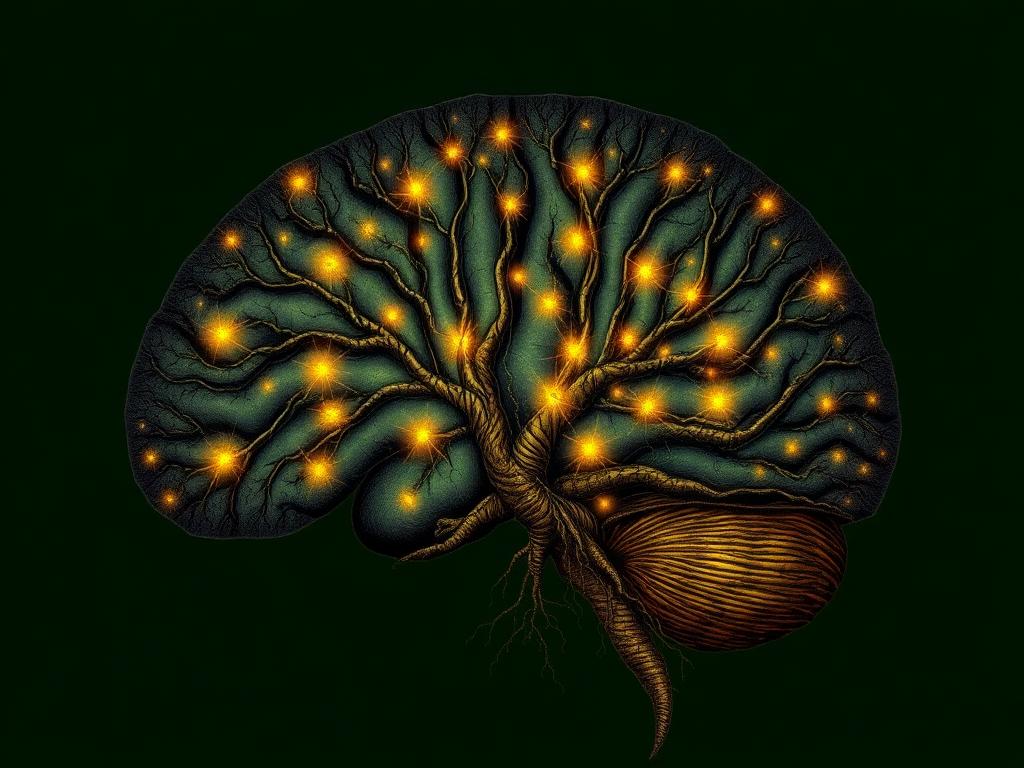
Perception as controlled hallucination — a working sketch.
Predictive coding proposes that perception is not, primarily, the brain receiving signals from the world. It is the brain generating predictions and then updating them against sensory input. What we experience is not the input but the prediction — refined, moment by moment, by the mismatch between expectation and evidence.
The evidence for this framework is now considerable, drawn from perception research, computational modeling, and studies of conditions in which the loop breaks down (schizophrenia, autism, and certain kinds of hallucination all appear to involve altered prediction-error weighting).
The felt implication is disorienting. We do not experience the world; we experience our best guess at it, checked against a sensory update. Most of the time the guess is close enough that the distinction does not matter. Occasionally — in visual illusions, in dreams, in certain altered states — the machinery becomes visible.
Anil Seth's phrase for this is 'controlled hallucination.' It is not quite right, but it is close, and it captures the essential inversion. Perception is not passive reception. It is a constant, disciplined act of construction.
Neuroplasticity Isn't Magic — It's Metabolism
How the brain rewires, and what actually accelerates the process.
The Vagus Nerve and Interoception
The body's report to the brain, and how it shapes mood.
Sleep, Glymphatics and Memory
Why the brain seems to clean itself at night.
Sign in to join the conversation. Guests can read every reply.
Loading conversation…