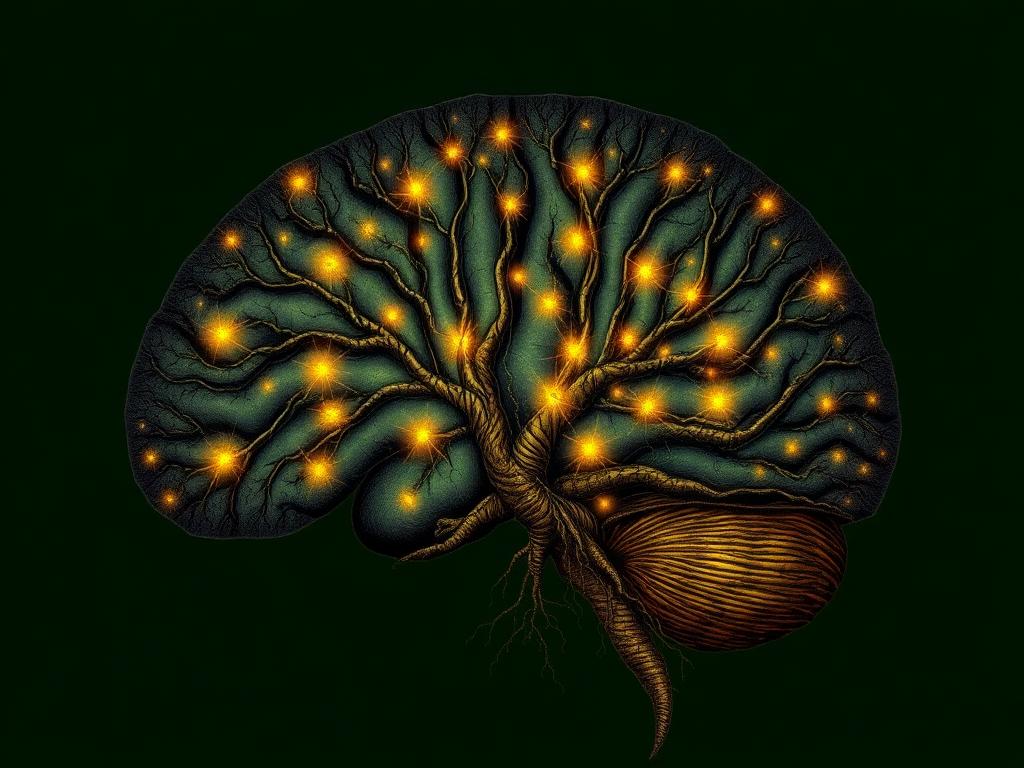
Why the brain seems to clean itself at night.
For most of neuroscience's history, sleep was a puzzle. Every organism with a nervous system does it. It is metabolically expensive, evolutionarily conserved, and dangerous — a sleeping animal is a vulnerable one. Something important must be happening.
The last decade has clarified at least two important somethings. The first is glymphatic clearance: during sleep, the interstitial space in the brain expands and cerebrospinal fluid flows through it, carrying away metabolic waste that accumulates during waking hours. This includes amyloid-beta, the peptide implicated in Alzheimer's.
The second is memory consolidation. Sleep — particularly the alternation of slow-wave and REM stages — appears to be when the day's experiences are replayed, integrated, and either committed to longer storage or pruned. Sleep-deprived subjects show measurable impairment in exactly the memory functions these stages are thought to support.
Neither finding is a full account of sleep. Both suggest that the widespread modern habit of treating sleep as optional or negotiable is biologically illiterate. The brain that does not sleep does not clean itself and does not learn what it lived through.
Neuroplasticity Isn't Magic — It's Metabolism
How the brain rewires, and what actually accelerates the process.
The Vagus Nerve and Interoception
The body's report to the brain, and how it shapes mood.
Predictive Coding, In Plain Language
Perception as controlled hallucination — a working sketch.
Sign in to join the conversation. Guests can read every reply.
Loading conversation…