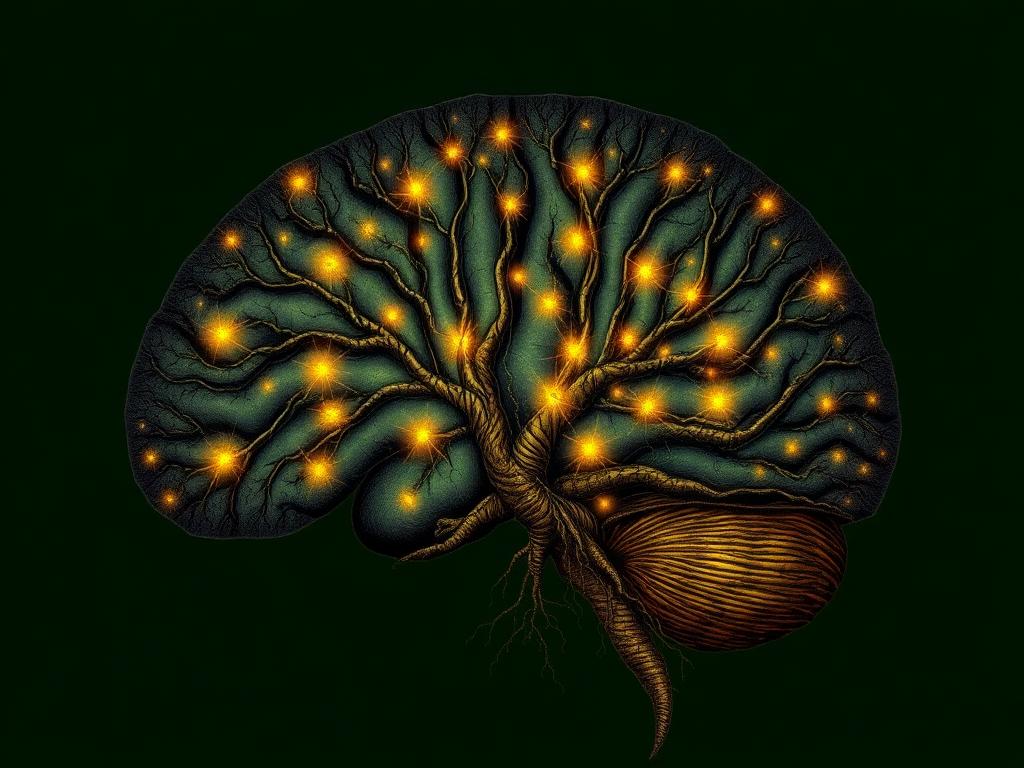
Phi, exclusion, and a math of consciousness.
Integrated Information Theory (IIT), developed principally by Giulio Tononi, proposes that consciousness is identical to integrated information — quantified by a value called phi (Φ). A system is conscious to the degree that its parts are informationally integrated in a way that cannot be decomposed into independent subsystems.
The theory has ambitious consequences. It implies that consciousness is not an all-or-nothing property but comes in degrees. It implies that any system with sufficiently high phi — including, potentially, some artificial ones — would be conscious. It implies that certain brain regions matter enormously and others less than we might have assumed.
IIT starts from phenomenology rather than physiology. It identifies axioms of experience (that it exists, that it is structured, that it is specific, that it is unified, that it is definite) and asks what a physical substrate would have to look like to satisfy them.
Critics point out that computing phi for realistic systems is intractable, that the axiomatic starting point is contentious, and that the theory makes counterintuitive predictions — for instance, that a certain kind of expanding grid can be highly conscious. Defenders respond that intractability and counterintuitiveness are not refutations.
The theory is not consensus. It is, however, one of the few frameworks that treats consciousness quantitatively and offers testable predictions. That alone earns it a serious place in the conversation.
The Hard Problem, Half a Century Later
Why explaining function still leaves experience unaccounted for.
Global Workspace and Attention
Broadcasting, competition, and access consciousness.
Non-Dual Awareness Across Traditions
Advaita, Dzogchen, and the recognition of nature of mind.
Sign in to join the conversation. Guests can read every reply.
Loading conversation…