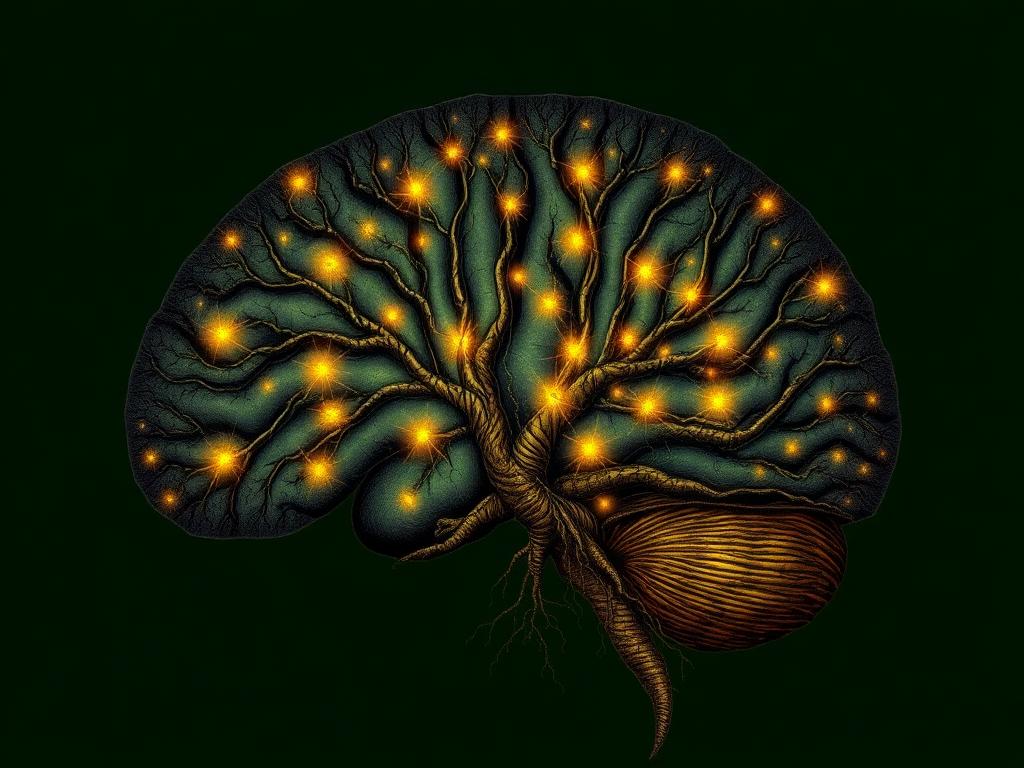
Advaita, Dzogchen, and the recognition of nature of mind.
The recognition that awareness itself is not divided into subject and object appears, in strikingly similar form, across several unrelated wisdom traditions. Advaita Vedanta in India, Dzogchen and Mahamudra in Tibet, certain currents in Zen, aspects of the Christian apophatic tradition — the pointing instructions differ; the pointed-to appears to be recognizably the same.
The claim is not primarily metaphysical. It is experiential. In these traditions, non-dual awareness is not a belief to be adopted but a recognition to be repeatedly cultivated: the sense in which awareness has no inside and no outside, in which the seer and the seen arise as a single event.
Whether this experience is what it claims to be — an accurate perception of the nature of mind — or a very interesting neural configuration is a question the traditions themselves do not always find urgent. What they insist on is that the recognition changes the person who has it.
The convergence across cultures is striking, though not unlimited. Details of interpretation vary enormously; practice protocols do not always transfer. But the felt sense of undivided awareness, once encountered, appears to be one of the more stable phenomenological features of human contemplative life.
The Hard Problem, Half a Century Later
Why explaining function still leaves experience unaccounted for.
Integrated Information Theory: A Primer
Phi, exclusion, and a math of consciousness.
Global Workspace and Attention
Broadcasting, competition, and access consciousness.
Sign in to join the conversation. Guests can read every reply.
Loading conversation…