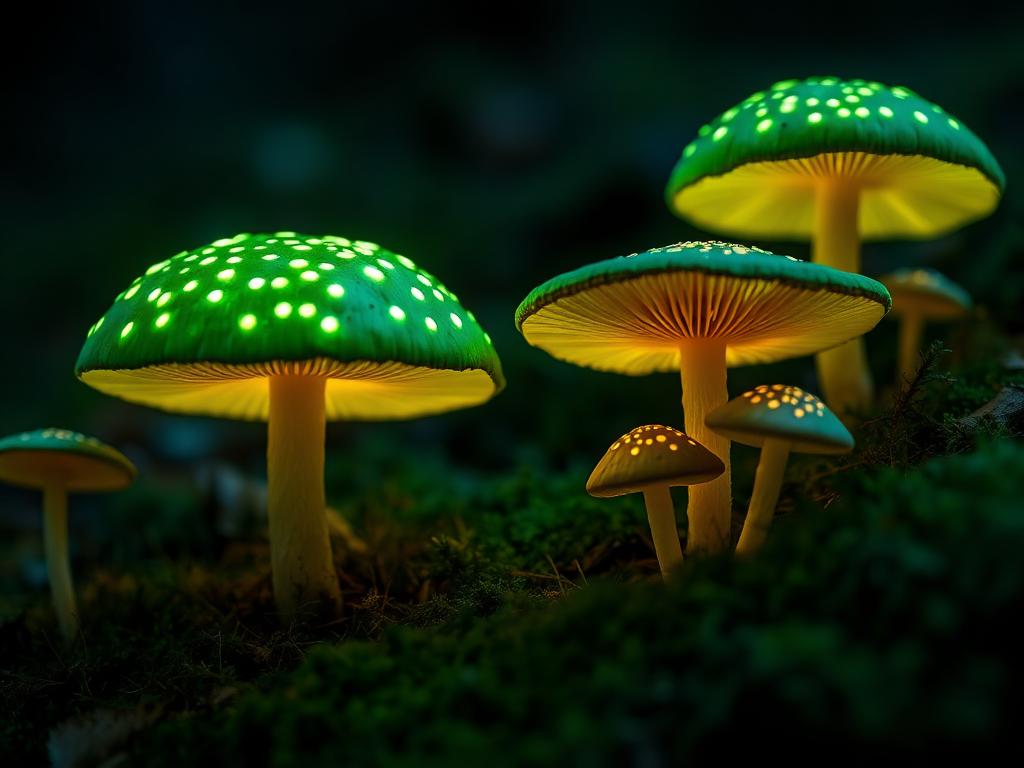
The Wood Wide Web, Twenty Years On
Mycorrhizal networks share carbon, warnings and — perhaps — something like conversation.
In 1997, Suzanne Simard published a small paper in Nature showing that Douglas fir and paper birch trees exchanged carbon underground through a shared fungal network. The paper was modest in scope. Its metaphors were not. Within a few years, journalists were writing about the 'wood wide web' as though the forest floor were a kind of botanical internet.
Two decades on, the picture is richer and messier than either the initial paper or the metaphor suggested. Mycorrhizal networks — the vast, delicate lace of fungal hyphae that colonize the root systems of most terrestrial plants — do transport carbon, nitrogen, phosphorus and water. Isotope labeling studies have shown this repeatedly. What is harder to establish is intent, or preference, or anything resembling agency.
The mycorrhizal relationship is ancient. Fossil evidence puts it in the Ordovician, when plants first colonized land. It was, plausibly, one of the deals that made the colonization possible: fungi got sugars, plants got access to water and soil minerals they could not reach alone. Neither partner would have survived on its own.
The controversies are real and worth taking seriously. Do trees actively route resources to their kin? The evidence is mixed. Are fungi neutral pipes, or do they shape the flow according to their own metabolic priorities? Increasingly, the second — the fungi are not passive plumbing. They are traders, arguably even market makers.
The 'warning signal' studies are especially interesting. When one plant in a network is attacked by insects, neighbors sometimes show up-regulation of defensive compounds — as though a chemical alarm has traveled underground. The mechanism is not fully worked out. The observation is repeatable enough to be taken seriously.
What has changed most, perhaps, is our sense of what a forest is. The tidy image of individual trees competing for light gives way to a stranger picture: a dispersed collective, mediated by an even more dispersed organism, in which the boundaries of an individual become genuinely difficult to draw.
Skeptics rightly caution against over-poeticizing this. Networks are not minds. Cooperation coexists with competition, parasitism, betrayal. Fungal partners can be as ruthless as any market participant. The wood wide web is not a utopia.
But it is real. It is old. And it quietly rearranges what we thought we knew about where one organism ends and another begins.
Twenty years in, the paper is still generating research programs. That, in science, is the highest compliment.
Lion's Mane and Nerve Growth Factor
A culinary mushroom drawing serious neuroscience attention.
Amanita muscaria in Siberian Shamanism
The red-capped mushroom's long, careful ritual life.
Mycoremediation of Contaminated Soil
Fungi as quiet, patient decontamination engineers.
Sign in to join the conversation. Guests can read every reply.
Loading conversation…