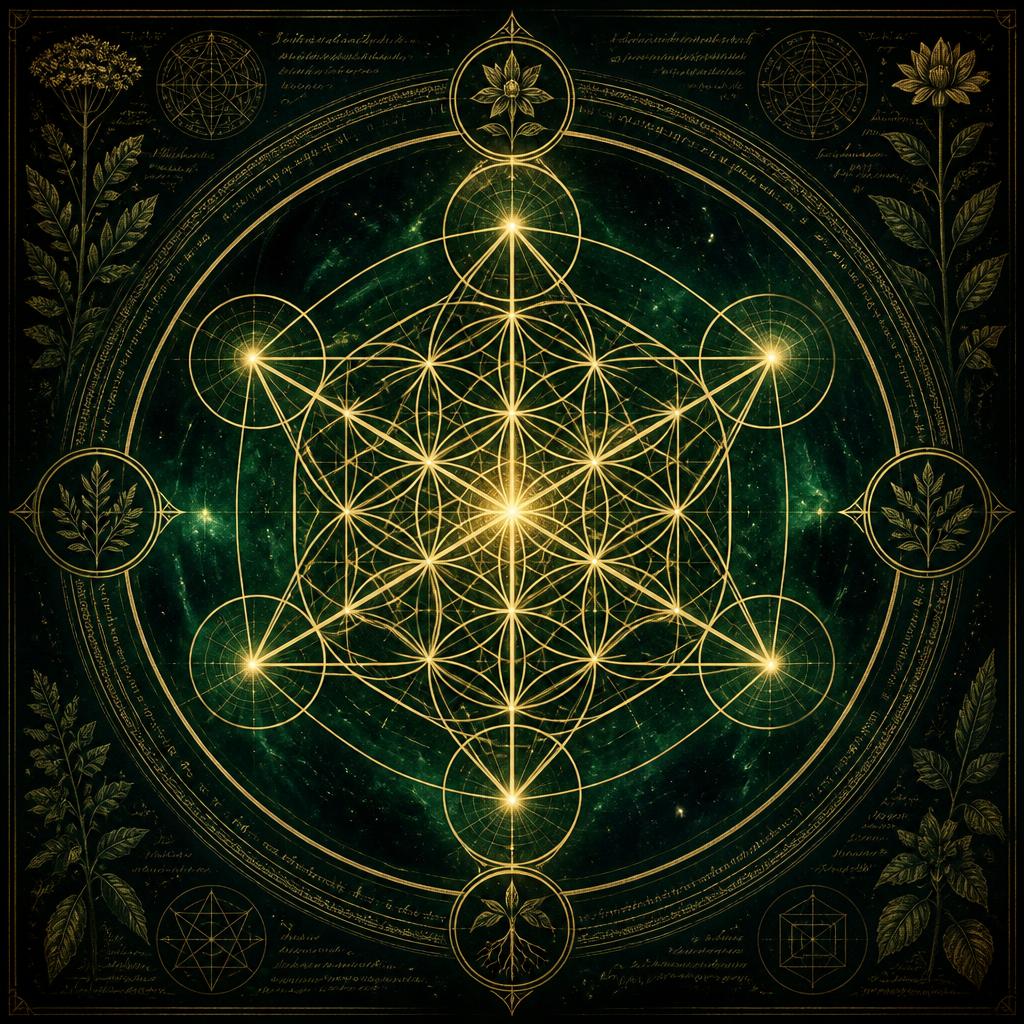
Girih tilings and the mathematics of devotion.
Because figurative depiction of the sacred is discouraged in Islamic tradition, Islamic ornament turned early and hard toward geometric abstraction. The result is one of the great sustained traditions of applied geometry in human history.
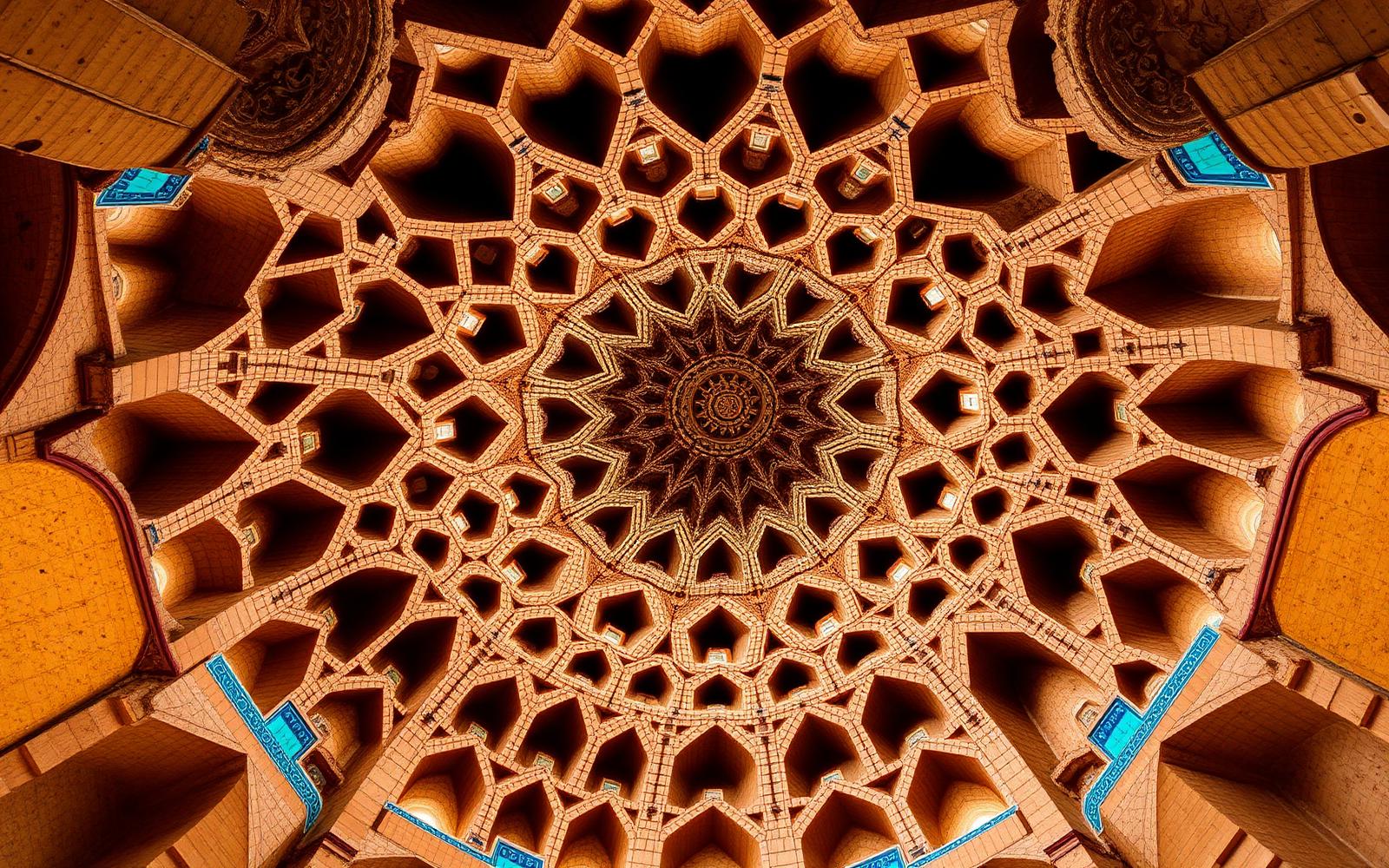
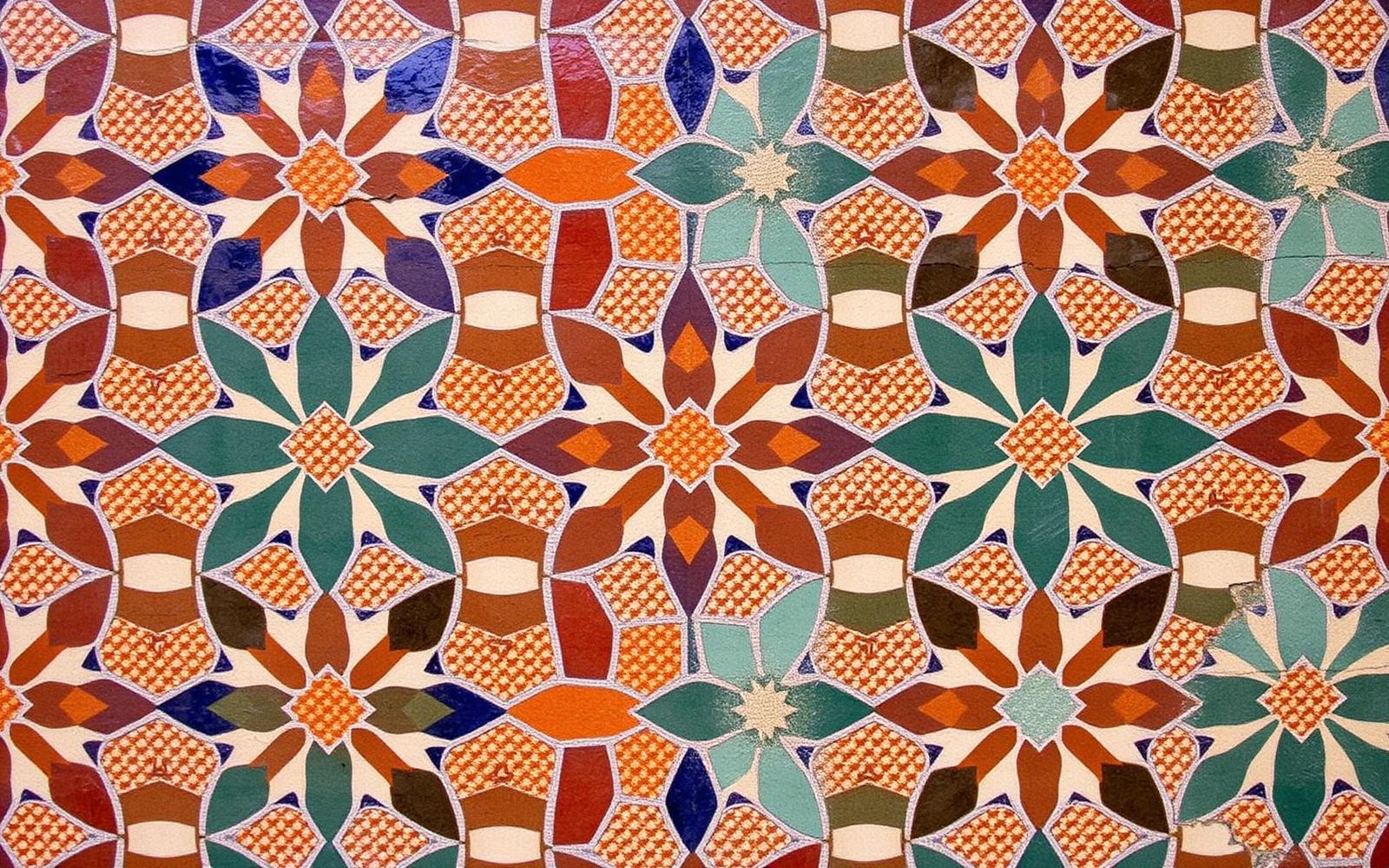
The most sophisticated developments — the girih tilings found in Iranian and Central Asian architecture from the 12th century onward — anticipate by centuries the aperiodic tilings formalized in the West only in the 1970s. Peter Lu's 2007 analysis of the Darb-i Imam shrine showed that its craftsmen were, functionally, using a set of tiles capable of producing quasi-crystalline patterns.
Whether the artisans understood the mathematics in modern terms is doubtful. What they clearly had was a design vocabulary — a small kit of decorated tiles, plus rules for combining them — capable of generating patterns of extraordinary complexity from local, repeatable moves.
The theological framing is worth attending to. In this tradition, geometric ornament is not decorative fill. It is contemplative object: a visual argument that beneath the world's variety runs a lawful, generous, and knowable order. The mathematics and the metaphysics are not, for the tradition, separable.
The Flower of Life: History and Structure
From Abydos to modern pattern language.
Metatron's Cube and the Platonic Solids
Nested geometries that recur across traditions.
Vesica Piscis: Overlap as Symbol
Two circles, one shared eye — a small figure with a long shadow.
Sign in to join the conversation. Guests can read every reply.
Loading conversation…