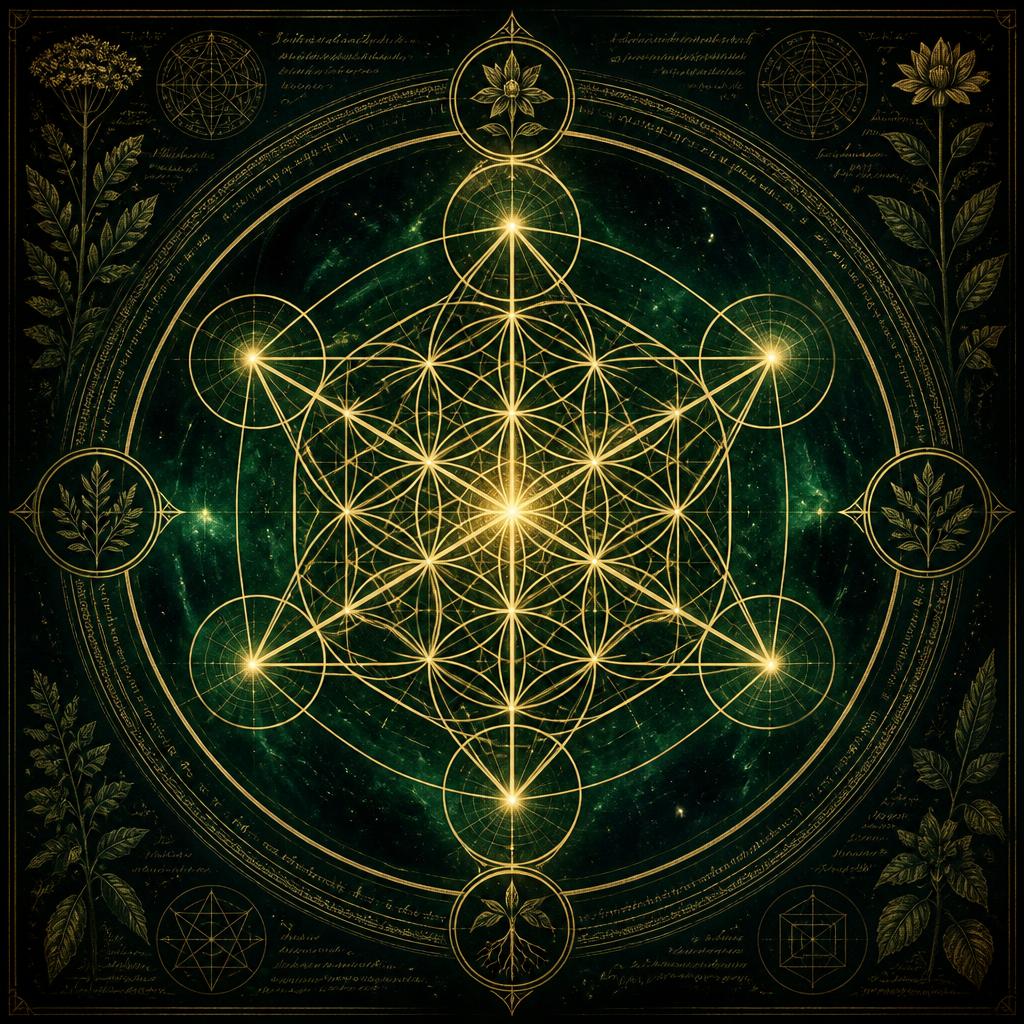
Two circles, one shared eye — a small figure with a long shadow.
The vesica piscis is the almond-shaped region formed by the overlap of two circles of equal radius, each centered on the circumference of the other. Geometrically, it is the simplest interesting product of two circles. Symbolically, it has been carrying more freight than almost any other figure in the sacred-geometry repertoire.
It appears in Christian iconography as the mandorla surrounding depictions of Christ. It is present in Pythagorean writing as the shape from which the equilateral triangle is naturally constructed (its two centers and either of its intersection points form one). Its proportions — the ratio of its long axis to its short is the square root of three — recur in classical architecture.
The symbolic reading, across traditions, tends toward the same theme: two overlapping wholes generating a shared field that belongs to neither exclusively. It is a figure for union, for genesis, for the crossing of domains.
That such a small geometric construction can carry so much interpretive weight says as much about the human eye for pattern as about the figure itself. Both are, in the end, the subject matter.
The Flower of Life: History and Structure
From Abydos to modern pattern language.
Metatron's Cube and the Platonic Solids
Nested geometries that recur across traditions.
Sacred Geometry in Islamic Architecture
Girih tilings and the mathematics of devotion.
Sign in to join the conversation. Guests can read every reply.
Loading conversation…